
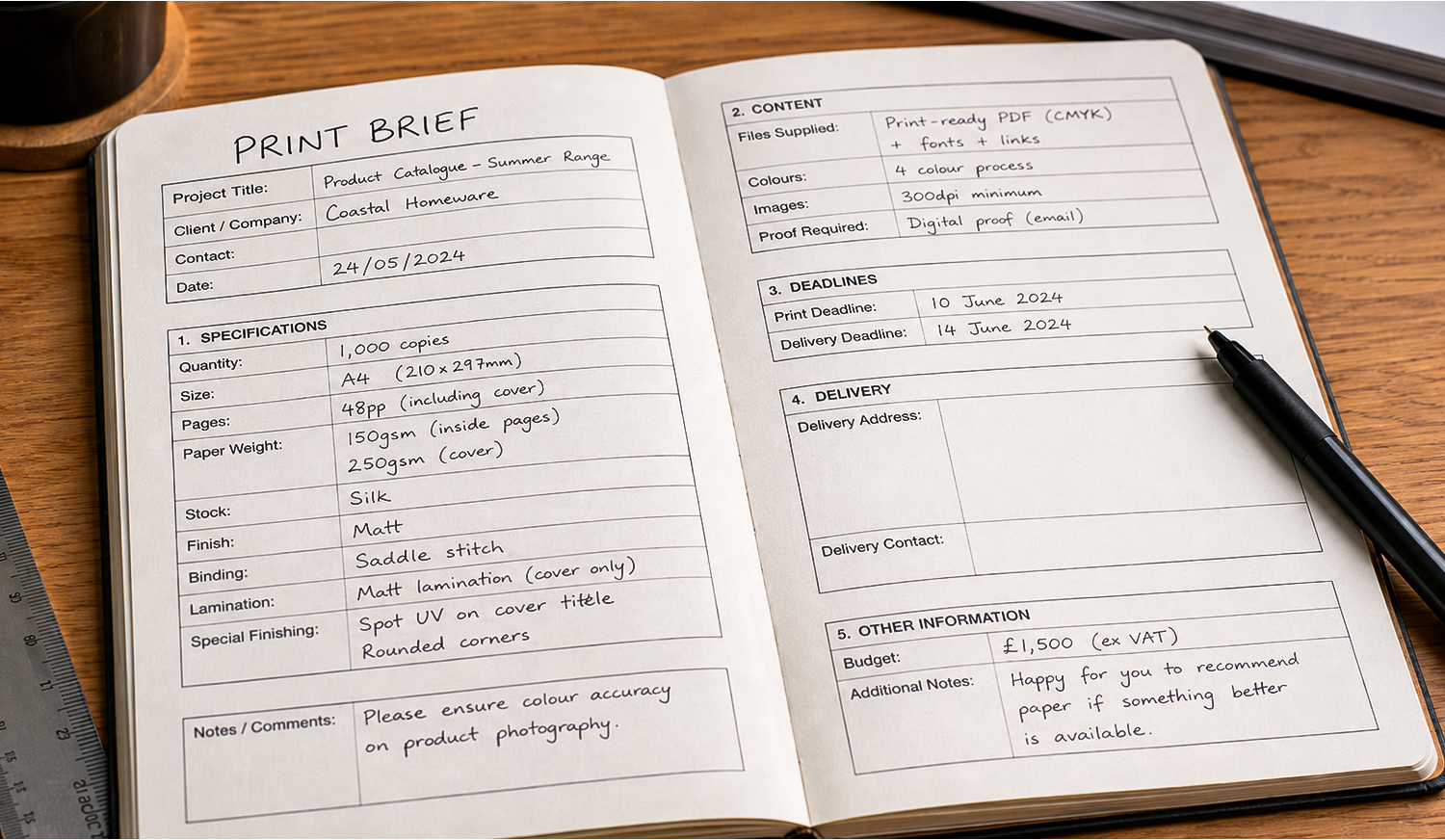
A clear brief is one of the simplest ways to keep a print project running smoothly. It helps everyone understand what is needed, when it is needed and what the finished result needs to achieve.
It also reduces delays, avoids assumptions and gives our studio and production teams the information they need to advise you properly from the very beginning.
A good print brief does not need to be complicated.
It simply needs to answer the right questions.
Key Details
When briefing a print project, the most useful information usually includes:
- What the printed item is
- The finished size
- The quantity required
- Whether it is single or double sided
- The number of pages, if it is a booklet or brochure
- The material or paper type, if known
- Any finishing requirements, such as folding, laminating, binding or foiling
- The required delivery date
- The delivery address or addresses
- Whether artwork will be supplied or still needs to be created
You do not need to have every detail finalised before speaking to us. In many cases, part of our role is helping you choose the right route. However, the more information we have at the start, the more accurate and useful our advice can be.
If you are supplying your own files and are unsure how to prepare them correctly, our print-ready artwork guide covers the key steps.
Think About the Audience
Good print is not only about how something looks. It is also about how it will be used out in the world.
Who will receive it? Where will it be seen? How long does it need to last? Will it be posted, handed out, displayed, carried around or used repeatedly?
These questions can influence everything from the weight of the stock to the type of finish used. A premium brochure may benefit from a heavier stock and a more refined finish, while a high-volume campaign may need a cost-effective approach that still feels professional and dependable.
Include Your Brand Requirements
If the project needs to follow brand guidelines, it is always useful to send them through at the start. This might include logos, colour references, fonts, previous examples or specific rules around layout and usage.
Brand consistency matters, and supplying these details early helps make sure the finished print feels connected to the rest of your marketing.
Be Clear About Deadlines
Deadlines are one of the most important parts of any print brief.
If the printed item is needed for an event, launch, mailing date or installation, let us know the final required date as early as possible. It is also helpful to know whether that date is fixed or flexible.
This allows us to plan backwards from the deadline, leaving enough time for artwork, proofing, production, finishing and delivery. Where timelines are tight, early and clear communication makes all the difference.
Tell Us What You Are Unsure About
You do not need to know every technical detail before getting in touch.
If you are unsure about the best size, paper, finish or format, tell us what you are trying to achieve and we can guide you through the most suitable options.
Sometimes a small change to the format, material or specification can make a project more efficient, more cost-effective or better suited to its intended use.
If you are planning a print project and would like advice before getting started, email us at hi@hickling-squires.co.uk, call 01773 536400 or use our contact form.